
Call Now For A Free Consultation:
Call Now For A Free Consultation:
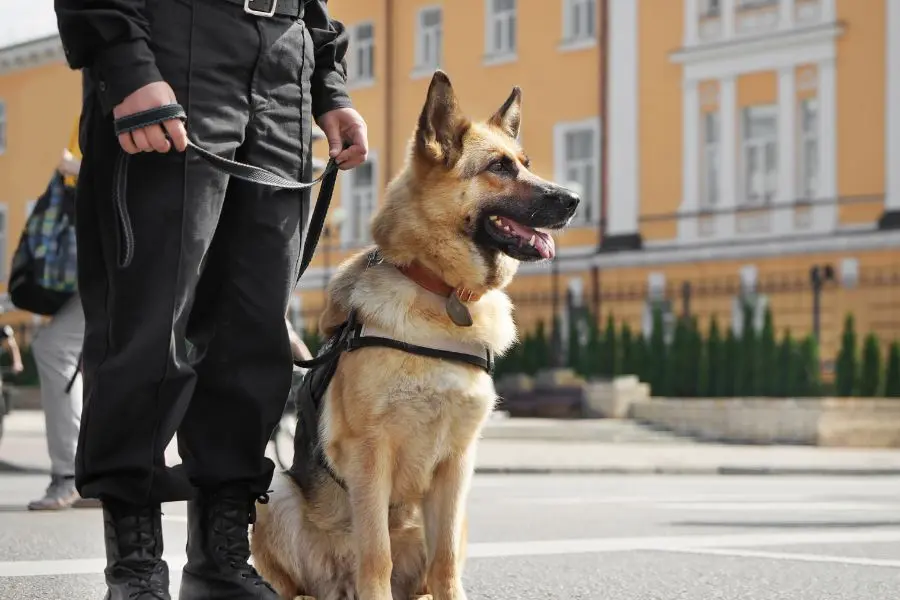
Yes, in many cases you can. If a police K9 bit you during an arrest, a police dog bite lawsuit lets you hold the officer, the handler, and sometimes the city or county responsible when the force used was unreasonable. Most California victims have both a federal civil rights claim and a state claim, and the strength of each depends on the specific facts of the encounter.
Justin Palmer Law Group represents people across California who were bitten, mauled, or seriously injured by a police dog during an arrest or detention. Justin A. Palmer built the firm around holding law enforcement accountable, and our California civil rights attorneys handle these cases in house, from the first evidence preservation letter through trial. If you are looking for answers after a K9 attack, our police dog bite lawyers can walk you through your options as part of our broader police brutality and civil rights practice.
Call us 24/7 at (310) 658-8935 to speak with a California police brutality lawyer, or reach out online to start your free case review.
Yes. A police dog bite is a use of force, and when that force is unreasonable, it can be the basis of a civil rights lawsuit against the officer, the handler, and the agency that deployed the dog. California gives injured people more than one path to hold police accountable after a K9 attack.
A police dog does not act on its own in the eyes of the law. The handler who released the dog, and the department that trained and deployed it, are responsible for the harm the animal causes. When officers use a K9 in a way that a reasonable officer would not have, the bite becomes excessive force. That opens the door to a federal civil rights claim for the violation of your protections against unreasonable force, and often a parallel claim under California's civil rights law as well.
These cases are not ordinary dog bite cases. A neighbor's dog that bites you is a personal injury matter. A police dog that bites you during an arrest is a civil rights matter, because the person controlling the dog was a government officer using the power of the state. Our California police dog bite attorneys treat these as police accountability cases from the first phone call.
A police dog bite crosses into excessive force when the force was unreasonable under the circumstances. Courts weigh how serious the suspected offense was, whether you posed an immediate threat, and whether you were actively resisting or trying to flee at the moment the dog was released. The longer a bite continues after you stop resisting, the more likely it becomes unlawful.
There is no bright line, but several facts push a K9 deployment toward the excessive side. Whether the officer gave a clear warning and a real chance to surrender before releasing the dog matters a great deal. So does the seriousness of the reason for the stop. Setting a dog on someone suspected of a minor, nonviolent offense looks very different from a deployment against a person who is armed and dangerous.
The duration of the bite is often the heart of the case. A dog that is called off the instant a person is under control is one thing. A dog that is allowed to keep biting, tearing, and holding after the person is on the ground, handcuffed, or clearly surrendering is another. California courts have recognized that letting a police dog bite for a prolonged period after a person is subdued can amount to excessive force. Those are the facts our police dog bite lawyers look for first.
The officer will almost always claim the K9 was necessary because you were resisting, hiding, or fleeing. That claim is the beginning of the argument, not the end of it. What matters is whether the level of force actually matched the threat you posed at that moment.
Resisting arrest does not give officers unlimited permission to use a dog, and it does not let them keep the dog on you after you have given up. Many strong police dog bite cases involve a person who ran, hid in a yard, or froze in fear, and who was then bitten far longer or far more severely than the situation called for. The question a jury asks is not whether you were perfectly compliant. It is whether a reasonable officer would have used a police dog in that way, for that long, against a person in your position.
This is why independent evidence matters so much. Body camera video, dash camera footage, dispatch audio, canine deployment logs, and medical records often tell a different story than the arrest report. Our California civil rights attorneys move quickly to preserve those records before they can be lost under an agency retention schedule.
Depending on the facts, a police dog bite lawsuit can name the individual handler, other officers on scene who failed to step in, and the city, county, or agency that employed them. Each defendant is reached in a different way, and a well built case often pursues more than one.
The handler is the most direct target, because that officer made the decision to release the dog and to keep it engaged. Other officers who were present can share responsibility when they had a chance to stop an ongoing, unlawful bite and did nothing.
A claim against the city or county itself is harder to prove but powerful. A local government can be held responsible when the violation grew out of its own policy, a longstanding custom, or a failure to properly train and supervise its canine unit. A pattern of similar K9 injuries that a department ignored can support that kind of claim against the municipality. Our police dog bite attorneys investigate the agency's canine program, not just the single deployment, to learn whether the bite was one incident or part of a pattern.
A police dog bite lawsuit can seek compensation for medical care, lost income, disfigurement and scarring, and the physical and emotional pain of the attack. In serious cases, punitive damages may be available against the individual officer. Every case is different, and no honest lawyer can promise a specific amount.
Police K9 injuries are rarely minor. These dogs are trained to bite hard and hold on, and the wounds often include deep punctures, torn muscle, nerve damage, and permanent scarring. Many victims need emergency surgery, follow up procedures, and treatment for infection. The categories of loss a police dog bite claim may cover include:
Because the value of a case turns on the facts, our California police dog bite attorneys review your injuries, your records, and the conduct of the officers before discussing what a claim may be worth.
Get medical care immediately, photograph every wound, keep the clothing you were wearing, and write down the names of any witnesses. Then send, or ask a lawyer to send, a written notice asking the agency to preserve its body camera and canine footage before it is deleted. The first days matter more than any later step.
Police dog wounds change quickly, and so does the evidence around them. Photograph the bite injuries in good light on the day of the attack, and again over the next few days as bruising and swelling develop. Save the torn or bloodstained clothing in a paper bag. Collect the contact information of anyone who saw the encounter, because bystander memories fade fast.
A preservation request is the step most people miss. Body camera video and canine deployment records can be erased under routine retention policies, sometimes within weeks. A written notice to the department, sent early, creates a paper trail and asks the agency to hold that footage. For a fuller walkthrough of how force is judged, our explainer on what counts as excessive force by police covers the standard in plain terms.
In California, a claim against a city, county, or other public agency generally must begin with a written government claim filed within six months of the incident. Federal civil rights claims usually carry a longer window of about two years. The two deadlines run at the same time, and missing the shorter one can bar part of your case.
The six month government claim deadline surprises almost everyone. If your police dog attack involved a California city police department, a county sheriff's office, or another public agency, the state side of your case can be lost if that written claim is not filed in time. The deadline runs from the date of the bite, not from the date you finished treatment or first spoke with a lawyer.
The federal civil rights deadline is generally longer, but it is not a reason to wait. Evidence disappears, witnesses move, and footage gets overwritten long before either clock runs out. Talking with a California civil rights lawyer within weeks, not months, protects both your evidence and your deadlines.
As of now, California has no statewide law that specifically bans or restricts using police dogs to make arrests. A recent effort in the state legislature to limit K9 deployments for arrests and crowd control did not pass. Police dog use is still judged case by case under excessive force standards and each department's own policies.
Lawmakers and advocates have pushed hard on this issue in recent years, pointing to data showing that police dogs seriously injure people across California every year, and that a large share of those injured are unarmed or accused of nonviolent conduct. A proposed statewide standard would have sharply limited when officers could deploy attack dogs. That effort stalled in the legislature, so no such statewide limit is currently in force.
What that means for your case is straightforward. Because there is no blanket ban, the lawfulness of a specific K9 deployment still comes down to whether the force was reasonable, and to what the individual agency's canine policy allowed. Our California civil rights attorneys use department policies, training records, and deployment logs to show when an officer went beyond what even the agency's own rules permitted.
Justin Palmer Law Group handles police dog bite cases in stages, starting with fast evidence preservation and a full investigation, then filing the right claims on time, negotiating from a position of strength, and taking the case to trial when the agency refuses to be fair. The firm keeps these cases in house from start to finish.
The first move is preservation and investigation. Our police dog bite lawyers send preservation letters, request body camera and canine records, gather medical documentation, and locate witnesses while memories are fresh.
Next comes the claim itself. The team files the required government claim within the short state deadline and prepares the federal civil rights case, naming the handler, the supporting officers, and the agency where the facts support it. From there, our California civil rights attorneys press the case through negotiation, and when a fair resolution is not offered, through litigation and trial. For claims that focus on agency responsibility, our discussions of suing a police department for negligence and our federal civil rights practice explain how these claims fit together.
Justin A. Palmer has built a California civil rights and personal injury practice focused on holding police accountable, and the firm handles police brutality matters, including K9 injuries, in house rather than referring them out. Clients work directly with a team that knows how these cases are won and lost.
Justin A. Palmer has been recognized by Super Lawyers in recent years, a peer based honor, and has devoted his practice to civil rights and serious injury cases across Southern California. The firm serves clients in Los Angeles, Long Beach, Inglewood, and the surrounding counties, and our California police dog bite attorneys bring the same focus to a canine excessive force case that they bring to any serious police misconduct matter.
If a police K9 attacked you during an arrest, talk to a lawyer before the evidence disappears and before the six month government claim deadline runs. A free consultation costs nothing and can protect your case.
Call us 24/7 at (310) 658-8935 to speak with a California police brutality lawyer, or reach out online to start your free case review.
Attorney Advertising | Prior results do not guarantee a similar outcome. The information on this website is for general information purposes only. Nothing on this site should be taken as legal advice for any individual case or situation. This information is not intended to create, and receipt or viewing does not constitute, an attorney-client relationship. This site is protected by reCAPTCHA and the Google Privacy Policy and Terms of Service apply.