
Call Now For A Free Consultation:
Call Now For A Free Consultation:
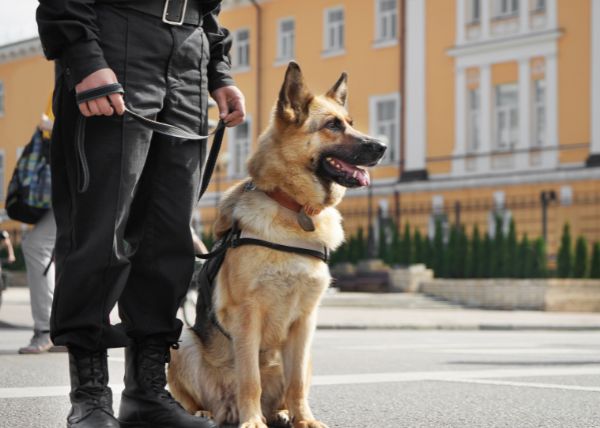
A police dog bite lawyer in Los Angeles represents people mauled by K-9 units from the LAPD, the Sheriff's Department, and other agencies. Claims can arise when a handler releases a dog on someone who was not a threat. They also arise when a bite lasts too long or a dog attacks a bystander.
Justin Palmer Law Group represents people hurt by police dogs across Los Angeles County and Southern California. Justin A. Palmer and the firm bring civil rights and injury claims against K-9 handlers and the cities and counties that run K-9 programs. This page is part of the firm's California police brutality lawyer practice.
If a police dog bit you or someone in your family, contact Justin Palmer Law Group to talk through what happened and which deadlines apply.
Call us 24/7 at (310) 658-8935 to speak with a California police brutality lawyer, or reach out online to start your free case review.
A police dog bite lawyer investigates why a K-9 was deployed, how long the bite lasted, and whether the handler followed policy. The work includes preserving body cam footage and filing a government claim within six months. Claims then go to state or federal court against the handler and agency.
Police dog bites are among the most serious injuries police cause. Many K-9s are trained to bite and hold until a handler calls them off. A bite that lasts seconds longer than needed can tear muscle, nerves, and blood vessels.
These cases draw on two areas of law. Civil rights law asks whether using the dog was excessive force. California's dog bite law asks whether the agency is responsible for the bite itself.
The evidence usually sits with the agency. K-9 deployment reports, bite records, and the dog's training history are kept by the department that released the dog.
A police dog bite can be excessive force when the handler released the dog on someone who posed no immediate threat. A missing warning or a bite that continued after surrender can also make it excessive. Courts treat a K-9 bite as a serious use of force. It must be justified by the facts at each moment.
Excessive force means force beyond what a reasonable officer would use in the same situation. The Fourth Amendment protects people from unreasonable seizures, including force during an arrest. Factors that matter in K-9 cases include:
A bite that starts out justified can become excessive if it continues after the person is on the ground and compliant. Read more about what counts as excessive force by police.
Yes. California's dog bite law generally makes the dog's owner responsible for bites regardless of fault. Police dogs get an exception when used in police work under a written policy. That exception does not apply to people who were not involved, or suspected of being involved, in the conduct that led to using the dog.
This rule matters for bystanders, neighbors, and family members. Think of a resident bitten in the wrong yard, or a person walking by during a K-9 search. They may not need to prove the handler did anything wrong.
The exception also depends on the agency having a written policy on proper police dog use. If no such policy exists, the ordinary dog bite rule may apply.
The city or county that owns the dog is usually the responsible party under this law. A government claim within six months is still required before suing under state law.
Officers may also be liable under civil rights law. Releasing a dog that bites an uninvolved person can be an unreasonable seizure.
Police dogs bite people who are not a threat because of their training, their handlers' control, and officers' deployment choices. Many K-9s are trained to find and bite the first person they reach. Poor handler control, weak warnings, and chaotic scenes increase the risk of wrongful bites.
The bite-and-hold method trains dogs to bite and keep biting until the handler gives a release command. That training turns a search into a use of force the moment the dog finds someone.
Dogs cannot tell a suspect from a homeowner, a child, or a person hiding out of fear. A dog searching a neighborhood may bite whoever it reaches first.
Handler problems also play a role. A dog off leash and out of sight, or a handler slow to give the release command, can turn a short bite into a mauling.
Agency records can reveal patterns. Bite rates, training logs, and past complaints about a particular dog or handler can show whether the problem was foreseeable.
Police dog bites cause deep puncture wounds, torn muscles and tendons, nerve damage, broken bones, and serious infections. Many people need surgery, skin grafts, or long-term wound care. Scarring and disfigurement are common, and some people develop lasting anxiety, nightmares, or fear of dogs after the attack.
Police K-9s are large, powerful dogs trained to hold on. The injuries they cause are often far worse than an ordinary dog bite. Common injuries include:
Some injuries get worse after the first treatment. Follow-up care and photos over weeks help show the full harm.
Police generally should give a clear warning before releasing a dog, unless doing so would put officers or others in danger. A warning gives the person a chance to surrender without being bitten. Failing to warn when there was time to do so can weigh heavily in an excessive force claim.
A proper warning is loud, clear, and repeated, and it tells the person a dog will be released. It also gives enough time to respond.
Many agency policies require warnings before a K-9 search of a building or yard. Policies may also call for warnings in languages people in the area speak.
Body cam footage and neighbor doorbell cameras can show whether a warning was given and whether anyone could hear it. Dispatch audio may also capture the timing.
Officers sometimes write that a warning was given when video shows otherwise. That gap can become central evidence.
Yes, you may still have a claim even if police were looking for you. Being a suspect does not give officers the right to use unlimited force. A bite can be excessive if you had surrendered or were hiding without a weapon. It can also be excessive if the dog kept biting after you were under control.
The strict liability dog bite rule usually does not help suspects. Their claims rely instead on civil rights law and California claims like battery and the Bane Act.
The Bane Act is a California civil rights law. It covers interference with rights through threats, intimidation, or coercion, including excessive force. Learn more about California's Bane Act.
A pending criminal case can affect a civil claim. Avoid giving statements about the bite before getting legal advice, because they can be used in both cases.
After a police dog bite, get medical treatment right away and follow every instruction for wound care. Photograph the wounds daily, save your clothing, and write down what happened. Collect names of witnesses and officers. Then speak with a police misconduct attorney before the six-month government claim deadline.
The first days after a bite shape both healing and evidence. Practical steps include:
Body cam footage is controlled by the agency, so a preservation letter should go out early. Read about evidence to save in the first 48 hours.
Police dog bite claims under California law generally require a government claim within six months of the bite. That claim goes to the city or county that runs the K-9 unit. Federal civil rights lawsuits generally must be filed within two years. Both deadlines run at the same time.
A government claim is a written notice to the public agency describing what happened and the harm caused. The agency generally has 45 days to respond.
If the agency rejects the claim in writing, a state-law lawsuit generally must be filed within six months of that notice. Read more about how the six-month government claim deadline works.
Claims against the LAPD go to the City of Los Angeles. Claims against the Los Angeles County Sheriff's Department go to Los Angeles County.
Responsibility for a police dog bite can fall on the handler, officers who failed to stop an excessive bite, and supervisors. The city or county that owns the dog can also be responsible. Under California law, the agency is generally responsible for what its officers do on the job, and it owns the dog.
Under federal law, a city or county is liable only when its own policy, custom, or failure to train caused the harm. This is called municipal liability.
K-9 programs can raise exactly those issues. A policy that allows dogs on low-level suspects, weak handler training, or ignored bite complaints can support a claim against the agency. Read more about claims against a city for police policies and training.
Officers who watch a dog maul someone and do nothing may also be responsible. State law requires officers to step in when another officer uses clearly excessive force.
Compensation after a police K-9 bite can cover medical bills, surgery, future treatment, lost wages, pain, scarring, and emotional distress. Punitive damages may be sought against individual handlers for reckless or intentional conduct, but not against cities or counties. The amount depends on the injury and the evidence.
Scarring and disfigurement often carry weight in dog bite cases. So do lasting limits on the use of a hand, arm, or leg.
No one can predict what a police dog bite case is worth. Factors include the nature of the violation, injury severity, and whether video exists.
Witnesses, the handler's and dog's history, any policy or training failure, the strength of qualified immunity, credibility, and venue also matter.
Qualified immunity can apply to federal claims against individual handlers in police dog bite cases. It is a court-created defense that shields officers from federal damages unless they violated a clearly established right. It does not protect cities or counties, and it does not apply to California's dog bite law or most state claims.
Courts look at whether earlier rulings made it clear that the specific use of the dog was unconstitutional. Prolonged bites on surrendered people have long been treated as a serious problem.
State-law claims give a separate path. California's dog bite rule, battery, and Bane Act claims do not depend on qualified immunity. Learn more in what qualified immunity means.
Our Los Angeles police dog bite attorneys start by protecting the six-month government claim deadline and preserving video and K-9 records. The work then moves through medical review, records requests, and investigation of the handler and dog. Claims are filed in state or federal court and pursued toward settlement or trial.
The first conversation focuses on the bite, the injuries, and whether a criminal case is pending. Those answers shape the claims and timing.
Preservation letters go out early for body cam footage, K-9 deployment reports, and the dog's bite and training records.
Investigation may involve retained professionals such as K-9 handling consultants, use-of-force analysts, plastic surgeons, and other medical providers. Their work helps show whether the deployment followed accepted practice.
For related injuries, see the Los Angeles police injury lawyer and police excessive force lawyer pages.
Were you or a family member bitten by a police dog in Los Angeles County? Justin Palmer Law Group can review what happened and explain the deadlines that apply. Contact Justin Palmer Law Group for a confidential case review.
Call us 24/7 at (310) 658-8935 to speak with a California police brutality lawyer, or reach out online to start your free case review.
Attorney Advertising | Prior results do not guarantee a similar outcome. The information on this website is for general information purposes only. Nothing on this site should be taken as legal advice for any individual case or situation. This information is not intended to create, and receipt or viewing does not constitute, an attorney-client relationship. This site is protected by reCAPTCHA and the Google Privacy Policy and Terms of Service apply.