
Call Now For A Free Consultation:
Call Now For A Free Consultation:
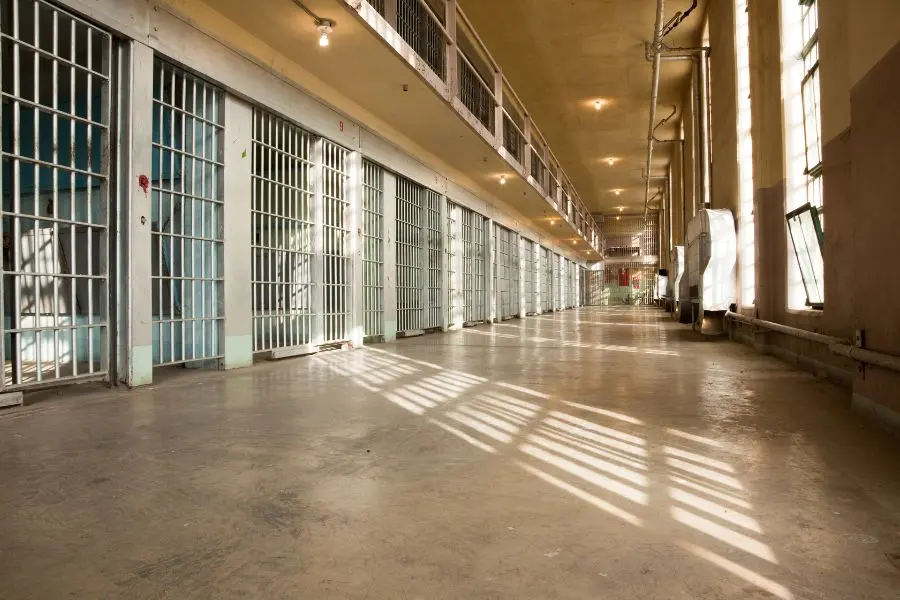
If you were held in jail without charges in Southern California, your constitutional rights were likely violated, and you may have a civil rights case against the officers and agency responsible. California law is clear: police can hold you for a maximum of 48 hours after an arrest before you must either be charged with a crime or released. Being held in jail without charges beyond that window, or being detained without any legal justification at all, is a serious violation of your Fourth and Fourteenth Amendment rights. You do not have to accept it, and you do not have to move on without accountability.
At Justin Palmer Law, our civil rights attorneys represent people throughout Southern California who were held in jail without charges and want to pursue justice and compensation. If that happened to you, here is everything you need to know about your rights and your legal options.
Call us 24/7 at (310) 658-8935 to speak with a California police brutality lawyer, or reach out online to start your free case review.
California Penal Code Section 825 establishes one of the strictest detention limits in the country. Under California law, if you were held in jail without charges being filed, police can only keep you for 48 hours before you must be brought before a judge and either charged or released. Most states allow up to 72 hours. California requires 48, not including days the court is closed such as holidays, which can extend the window slightly.
Being held in jail without charges beyond that 48-hour window is a constitutional violation. It does not matter whether the officer believed you committed a crime. It does not matter what the circumstances of your arrest were. If you were held in jail without charges past the legal deadline, the detention became unlawful, and your rights were violated. Our civil rights attorneys at Justin Palmer Law take cases involving people who were held in jail without charges in Southern California seriously, because the law means nothing if no one enforces it.
People held in jail without charges in California have multiple constitutional protections that kick in the moment the detention becomes unlawful. Understanding which rights were violated is the foundation of any civil rights claim our attorneys build on your behalf.
Your Fourth Amendment right protects you against unreasonable seizure. Being held in jail without charges and without probable cause is an unreasonable seizure of your person, full stop. Your Fourteenth Amendment right to due process protects you from being deprived of your liberty without lawful legal process. When police hold you in jail without charges and without bringing you before a judge within the required timeframe, they are depriving you of your liberty without due process. Your Sixth Amendment right to a speedy trial and to be informed of the charges against you is also implicated when you are held in jail without charges for an extended period without any formal accusation being made.
Each of these violations can form the basis of a Section 1983 civil rights claim in federal court, which our civil rights attorneys pursue on behalf of people who were held in jail without charges throughout Los Angeles and Southern California.
People sometimes confuse being held in jail without charges with a false arrest, but the two are distinct legal events that can overlap or occur independently. A false arrest happens when an officer takes you into custody without probable cause, meaning there were no specific facts supporting a reasonable belief that you committed a crime. Being held in jail without charges can happen even after a lawful arrest, if prosecutors fail to file charges within the legal timeframe and police continue to hold you anyway.
Both situations give rise to civil rights claims, and both can be pursued simultaneously. If you were falsely arrested and then held in jail without charges past the 48-hour deadline, our civil rights attorneys build claims addressing both violations. Under California law, false arrest and false imprisonment arising from the same incident are treated as a single civil claim, but the combination of both strengthens the case for damages significantly.
Yes. If you were held in jail without charges in Southern California, you have the right to file a civil rights lawsuit against the officer, the department, and the city or county responsible. The primary legal vehicle is 42 U.S.C. Section 1983, the federal civil rights law that allows individuals to sue government officials for constitutional violations committed under color of law. Being held in jail without charges and without probable cause is exactly the type of Fourth Amendment violation Section 1983 was designed to address.
In California, our civil rights attorneys also pursue claims under the Bane Act, which provides additional state-level protections and remedies for people whose civil rights are violated through force or coercion. When someone is held in jail without charges, the Bane Act applies because the unlawful detention itself involves the use of force, namely the physical confinement in a jail cell, to deprive that person of their constitutional rights. Our civil rights attorneys evaluate both federal and state claims in every case involving someone held in jail without charges to maximize the legal pressure and the potential compensation.
The financial and personal consequences of being held in jail without charges can be significant and lasting. Our civil rights attorneys pursue every category of compensation available to reflect the full impact of what you experienced. Damages in a case involving someone held in jail without charges can include the following:
Yes, and pursuing the city or county directly is often the most important step in a case involving someone held in jail without charges. If you were held in jail without charges by LAPD, the Los Angeles County Sheriff's Department, or any other municipal law enforcement agency in Southern California, our civil rights attorneys pursue Monell claims against the agency and municipality alongside claims against the individual officer.
Under Monell, a city can be held liable when someone is held in jail without charges as a result of a departmental policy, a widespread custom or practice, or a systemic failure to train officers on the legal limits of detention. When a pattern exists where multiple people have been held in jail without charges by the same agency or officers, that evidence strengthens the Monell claim and significantly increases the potential value of your case. Our civil rights attorneys investigate every case for that evidence.
Qualified immunity is a defense officers frequently raise when someone held in jail without charges attempts to sue. The doctrine protects officers from personal liability unless they violated a clearly established constitutional right. The 48-hour rule under California Penal Code Section 825 and the Fourth Amendment prohibition on detention without probable cause are both well-established legal standards, which means qualified immunity is harder for officers to claim in cases involving someone held in jail without charges past the legal deadline.
Our civil rights attorneys at Justin Palmer Law analyze qualified immunity from the start of every case involving someone held in jail without charges and build the legal argument to defeat it before it becomes an obstacle. Qualified immunity does not protect municipalities from Monell liability, which is another reason why our civil rights attorneys pursue claims against the city alongside claims against individual officers.
If you were held in jail without charges in California, strict deadlines apply. Before filing a civil rights lawsuit against a city or county agency, you must file a government tort claim with the responsible agency within six months of the incident. Missing this deadline eliminates your right to compensation regardless of how strong your case is. If the agency rejects your tort claim, you then have six months from the date of rejection to file your lawsuit in court. Federal Section 1983 claims carry a two-year statute of limitations in California.
Both clocks start running from the date you were held in jail without charges, not the date you contacted an attorney. Our civil rights attorneys at Justin Palmer Law act immediately upon being retained, filing preservation demands, meeting every deadline, and protecting your ability to pursue the full compensation you deserve.
If you were held in jail without charges and have been released, the steps you take now directly affect your ability to pursue a civil rights case. Our civil rights attorneys at Justin Palmer Law recommend the following:
Every day that passes after being held in jail without charges is a day closer to a legal deadline that could permanently eliminate your right to compensation. Do not wait.

When someone who was held in jail without charges comes to our firm, our civil rights attorneys get to work immediately. We send legal preservation demands to lock down booking records, detention logs, body camera footage, and any other evidence documenting the unlawful hold. We investigate the full circumstances of why you were held in jail without charges, identify every responsible party, and build the strongest possible case for both compensation and systemic accountability.
Our civil rights attorneys handle every case involving someone held in jail without charges on a contingency fee basis, meaning you pay nothing upfront and we only collect a fee if we win. Under federal civil rights law, if you prevail on a Section 1983 claim, the defendant can be required to pay your attorney fees. People who were held in jail without charges should not have to pay out of pocket to hold law enforcement accountable. Our civil rights attorneys at Justin Palmer Law make sure they do not have to.
If you were held in jail without charges in Southern California, you have rights, and you have legal options. Our civil rights attorneys at Justin Palmer Law represent people throughout Los Angeles and Southern California who were held in jail without charges and want to pursue accountability and compensation from the officers and agencies responsible. Contact us today for a free consultation to discuss what happened and find out what your case may be worth.
Call us 24/7 at (310) 658-8935 to speak with a California police brutality lawyer, or reach out online to start your free case review.
Attorney Advertising | Prior results do not guarantee a similar outcome. The information on this website is for general information purposes only. Nothing on this site should be taken as legal advice for any individual case or situation. This information is not intended to create, and receipt or viewing does not constitute, an attorney-client relationship. This site is protected by reCAPTCHA and the Google Privacy Policy and Terms of Service apply.