
Call Now For A Free Consultation:
Call Now For A Free Consultation:
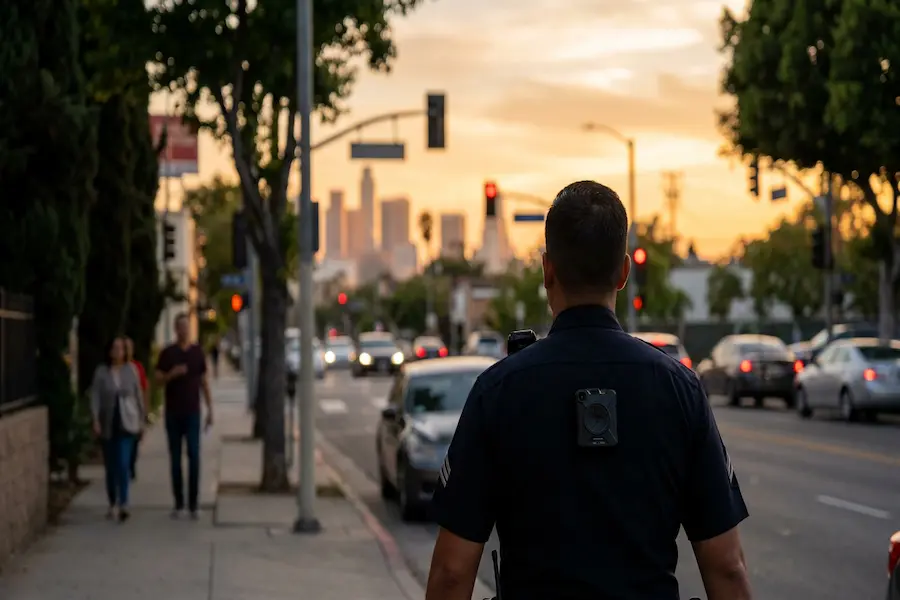
You can request LAPD body-cam footage under the California Public Records Act, the state law that provides the public access to many government records. Body cam footage is the video and audio an officer records on a camera worn on the uniform. Anyone can ask for it. Getting it is another matter.
Here is the part that catches people off guard. That video does not sit on a shelf forever. Cameras get wiped on a schedule, and footage tied to no active case can disappear in a couple of months. The clock starts when the recording is made, not when you ask.
This post walks through how to request the footage, how long the LAPD has to respond, what they can withhold, and what to do if they say no. It is written for the person who was stopped, searched, arrested, or hurt, and who needs the video before it is gone.
Yes. Body cam footage is a public record in many situations, and you can request it from the LAPD under the California Public Records Act. People call that law the CPRA for short. It lets you request records held by city and county agencies, including police departments.
Body-worn camera footage is the video and sound captured by the small camera clipped to an officer's chest or shoulder. It often shows the stop, arrest, search, or use of force from the officer's point of view. It can also pick up what everyone said.
Not every request gets a yes. Some videos are protected while a case is open. Some is released only in part. But the starting point is simple. You have a right to ask, and the LAPD has to respond.
A good request is specific. The more detail you give, the faster the LAPD can find the right video. It also gets harder for them to claim they could not locate it. You do not need a lawyer to file one, though our Los Angeles police misconduct lawyers file these often and know what to include.
Here is what a strong request includes.
You can submit the request through the City of Los Angeles public records portal online, by mail, or in person. Ask for written confirmation that they received it. Keep a copy of everything you send.
The LAPD generally has 10 days to tell you whether it has records it can release. That first answer is a yes-or-no on access, not on the video itself. In unusual cases, they can take about 14 more days to decide.
Notice the gap. Telling you they have the footage is not the same as handing it over. After they confirm access, they must produce the records promptly, but the law allows them time to handle large or sensitive files.
If the deadline passes and you hear nothing, follow up in writing. A polite written reminder creates a record that you asked, and they went quiet. That record matters later if you have to push.
California has a separate transparency law for the most serious incidents. When an officer fires a gun at someone or uses force that kills or causes great bodily injury, the recordings of that event can be released. Great bodily injury means a significant or serious physical injury.
In those cases, the agency generally must release the audio and video within 45 days of the incident. They can delay release if doing so would interfere with an active investigation, but they have to explain the delay. They cannot sit on it forever.
This track is stronger than an ordinary request. If your situation involves a shooting or a severe injury, the footage is not just askable. The law leans toward putting it out.
A quick example. A man is taken to the ground during an arrest and ends up with a fractured skull. That is the kind of serious injury that can trigger the release rules, even if the city would rather keep the video quiet.
The LAPD does not have to release everything exactly as recorded. The law allows them to withhold or blur certain information to protect privacy and ongoing cases. Knowing this ahead of time saves you from feeling blindsided.
Common reasons for redaction or withholding include the following.
If they redact more than seems fair, you can ask them to explain each cut. They are supposed to tell you why a record, or a portion of it, is being withheld.
Looking at a record is free. The cost comes in when you ask for a copy. For most documents, the agency can charge only the direct cost of making the copy, which is usually small.
Video is different. Editing footage to blur faces or remove protected content takes time and software. For body camera video, the LAPD may pass along the reasonable cost of editing. Ask for a cost estimate before they start, so the bill does not surprise you.
If money is tight, you can narrow your request to a single clip or a shorter time window. A tighter request often means less editing and a lower cost.
Send a preservation letter, and send it fast. A preservation letter is a written notice instructing the department to retain specific footage and not delete it. This is the most urgent step after an incident.
Body camera video is stored on a set schedule. Routine footage with no case attached can be overwritten within weeks or months. Once it is gone, it is usually gone for good.
Your preservation letter should name the date, time, place, and officers, just like your records request. It should say clearly that you intend to use the footage and that it must not be destroyed. Send it to the department and keep proof of delivery.
This is the part most people do not realize until it is too late. They wait to see how the criminal case shakes out. By the time they think about the video, the camera has already cycled past it. Our police misconduct lawyers in Los Angeles send preservation letters the moment we take a case for exactly this reason.
A denial is not the end of the road. Agencies turn down requests for many reasons, and some of those reasons do not hold up. You have several ways to push back.
That last point matters. Because the law can shift legal costs onto the agency when a denial was improper, you are not always stuck paying out of pocket to fight for public video.
Footage is evidence. In a police misconduct case, it can show what an officer did, what was said, and whether the written report matches the video. That is why getting it early changes everything.
Timing also ties into deadlines you cannot miss. If you plan to bring a claim against a city or county in California, you usually have a short window, often six months from the incident, to file a formal government claim. Waiting on footage does not pause that deadline.
There is also the criminal side. If you are facing charges for the same incident, the video may come out in that case as well. The two tracks can move at different speeds, and what you do in one can affect the other.
None of this guarantees a result. What footage does is give you a clear, time-stamped record of what happened, instead of one side's word against the other.
Yes. Being arrested does not strip you of the right to request records under the California Public Records Act. In fact, you often have the clearest reason to ask, since the footage shows what happened to you.
No. Anyone can file a request on their own. That said, our civil rights lawyers in Long Beach and Inglewood often word the request to close loopholes and send a preservation letter at the same time.
It depends on the type of footage. Routine video with no case attached can be overwritten in weeks or a few months. Video flagged as evidence is usually kept longer, which is why an early preservation letter matters so much.
Looking at a record is generally free. The LAPD can charge for the cost of making a copy, and for video, they may add the reasonable cost of blurring protected content. Ask for an estimate first.
That itself can matter. Department policy usually requires cameras to be on during stops and arrests. A camera that was off, or footage with a gap, is something our police misconduct lawyers can raise.
The video that shows what really happened will not wait for you. Justin A. Palmer and our Los Angeles police misconduct lawyers can send a preservation letter and request the footage right away. Call Justin Palmer Law Group for a free, confidential consultation, available 24/7, and you pay nothing unless we recover for you.
Call us 24/7 at (310) 658-8935 to speak with a California police brutality lawyer, or reach out online to start your free case review.
Attorney Advertising | Prior results do not guarantee a similar outcome. The information on this website is for general information purposes only. Nothing on this site should be taken as legal advice for any individual case or situation. This information is not intended to create, and receipt or viewing does not constitute, an attorney-client relationship. This site is protected by reCAPTCHA and the Google Privacy Policy and Terms of Service apply.