
Call Now For A Free Consultation:
Call Now For A Free Consultation:
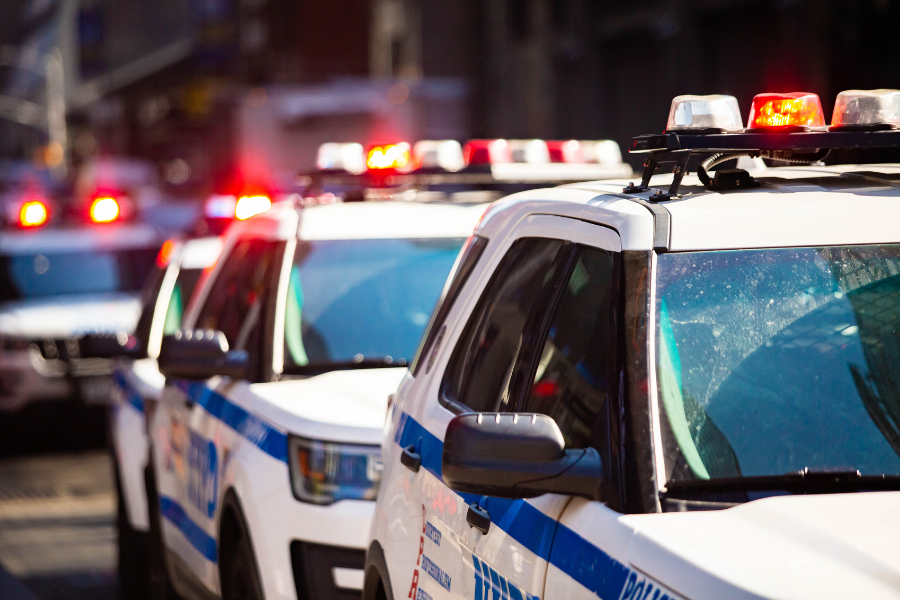
Yes. You can sue if you were hurt in a police chase in California. Who you can sue depends on which car hit you and how the agency trains its officers. A strong state law protects many police agencies from crashes caused by the fleeing driver, so the details decide your options.
It usually happens in seconds. You are driving home through South Los Angeles on a green light. A car blows through the intersection with three patrol cars and a helicopter behind it. The collision crushes your door, and the chase moves on without you.
People hurt this way often assume the police are responsible. Sometimes they are. Other times, California law points the claim at the fleeing driver instead.
After a police chase crash in Los Angeles, you may be able to sue the fleeing driver, the police agency, or both. Claims against the city or county depend on whether a patrol car caused the crash and whether the agency met California's pursuit policy rules. Your own auto insurance may also cover part of the harm.
Most chase injuries involve more than one possible source of recovery. Each one follows different rules:
Sorting out who is responsible early matters. Each claim has its own deadline, and the government claim deadline is the shortest.
California's police pursuit immunity protects a public agency from liability for injuries caused by a fleeing driver's car. It applies only if the agency adopted a pursuit policy meeting state standards. The agency must also train officers on that policy every year and require them to certify in writing that they read and understood it.
This rule comes from the California Vehicle Code. Lawmakers created it to push agencies toward safer pursuit policies. In exchange, agencies that follow the rules get protection from many chase lawsuits.
The immunity covers collisions with the vehicle being chased. It does not automatically cover every injury that happens during a pursuit. That gap is often where a claim against the police survives.
The policy itself must address specific topics. Those include when officers may start a chase, when supervisors step in, and when a chase must end. The policy must also address danger to the public.
The agency carries the burden of proving the immunity applies. Pursuit immunity is a defense the city or county must raise and support with evidence about its policy and training.
A police agency can lose pursuit immunity when its written policy is missing required elements or it skipped annual pursuit training. Immunity can also fail if the policy did not require officers to certify they read it. It does not cover crashes where a patrol car, not the fleeing car, hit you.
Agencies often assume they qualify. A close look at the records sometimes shows otherwise. Several gaps can matter:
Agencies do not have to prove that every single officer signed the certification. The policy must require it, and the agency must actually train on it.
If a police car hit you during a chase, California law generally makes the agency responsible for its officer's negligent driving. The officer personally is usually protected during an emergency pursuit, but the city or county can still be liable. Pursuit immunity for crashes with the fleeing car does not cover this situation.
Police cars running lights and sirens may break normal traffic rules. They can run red lights and exceed the speed limit during an emergency. That privilege has a limit.
California law still requires emergency drivers to drive with due regard for the safety of everyone on the road. An officer who blows through a busy intersection at high speed without slowing may fail that duty.
Bystanders, pedestrians, and other drivers can all be hit by patrol cars. So can passengers in nearby cars. The claim generally runs against the employing agency, such as the City of Los Angeles for the LAPD. For a closer look at these claims, see the police negligence lawyer page.
A federal civil rights claim after a police chase is possible but limited. Officers who intentionally use a vehicle to stop someone, such as by ramming, make a Fourth Amendment seizure. That force is judged for reasonableness. Bystanders hurt by a chase face a much higher bar under the Fourteenth Amendment.
Excessive force means more force than a reasonable officer would use in the same situation. A ramming at high speed or a tactical vehicle stop can count as force. So can shooting at a moving car, which California law treats as deadly force.
For bystanders, federal law generally requires proof that officers acted with a purpose to cause harm unrelated to stopping the suspect. Carelessness or poor judgment during a chase usually does not meet that standard.
That is why most bystander cases rely on California law instead. State claims for negligent driving do not face the federal intent requirement. Officers may raise qualified immunity on federal claims. Read more in what qualified immunity means.
A passenger in a car fleeing police can usually make a claim against the driver who chose to flee. Claims against the police are harder but possible, especially if officers used unreasonable force to stop the car. A passenger who did not choose to run is in a different position than the driver.
Passengers often have no control over the decision to flee. Some are children. Some are friends who begged the driver to stop.
The driver's insurance may cover passenger injuries, though policies sometimes exclude intentional acts. Your own policy, or a household member's policy, may also apply.
If officers rammed the car, shot into it, or used a dangerous maneuver at high speed, a passenger may have a Fourth Amendment claim. The question is whether the force used to stop the car was reasonable for everyone inside it.
The fleeing driver's auto insurance may cover your injuries, but many fleeing drivers carry little or no coverage. California's minimum policy limits are often far below the cost of a serious injury. Your own uninsured or underinsured motorist coverage, medical payments coverage, and criminal restitution can help fill the gap.
Several sources can work together after a chase crash. Each one has its own rules and paperwork:
Fleeing from police and causing serious injury or death is a felony in California. A criminal case against the driver can produce records that also help your civil claim.
Claims against a California police agency generally require a government claim within six months of the crash. Personal injury lawsuits against the fleeing driver generally must be filed within two years. Federal civil rights claims also generally have a two-year deadline. Missing the six-month claim deadline can block your state claim against the agency.
A government claim, sometimes called a notice of claim, is a written form filed with the city or county before you can sue it. For the LAPD, it goes to the Los Angeles City Clerk. For the Sheriff's Department, it goes to the County of Los Angeles.
Insurance claims have their own notice requirements. Report the crash to your own insurer promptly, even if you believe someone else is at fault.
The statute of limitations is the deadline to file a lawsuit. Different defendants can have different deadlines, so track each one separately. For more, read how the six-month government claim deadline works.
Key evidence after a police chase crash includes dash cam and body cam footage, radio recordings, the pursuit report, nearby cameras, and the scene. Records showing whether a supervisor ordered officers to end the chase can be especially important. Some of this evidence disappears within days.
Police agencies document pursuits closely. California agencies must report pursuit data to the California Highway Patrol, including crashes and injuries. Internal reports often show the speeds, the route, the reason for the chase, and whether supervisors weighed in.
Radio and dispatch recordings can be the most revealing. They capture the moment a supervisor asked about speeds or told officers to back off. They also show whether officers continued after being told to stop.
Private video matters too. Gas stations, stores, and homes along the route may have cameras. Many overwrite footage within days, so ask early. Photograph the scene, your car, and your injuries. For more steps, see evidence to save in the first 48 hours.
Get medical care right away, even if you feel fine. Crash injuries such as concussions and spinal damage can surface later. The Los Angeles police injury lawyer page explains the types of harm our Los Angeles police misconduct attorneys review.
If you were hurt in a police chase, talk with Justin Palmer Law Group before the six-month claim deadline passes. Our Los Angeles police negligence lawyers can review the pursuit records, the agency's policy, and every source of recovery with you. Contact Justin Palmer Law Group for a confidential case review.
Co Citations
Attorney Advertising | Prior results do not guarantee a similar outcome. The information on this website is for general information purposes only. Nothing on this site should be taken as legal advice for any individual case or situation. This information is not intended to create, and receipt or viewing does not constitute, an attorney-client relationship. This site is protected by reCAPTCHA and the Google Privacy Policy and Terms of Service apply.