
Call Now For A Free Consultation:
Call Now For A Free Consultation:
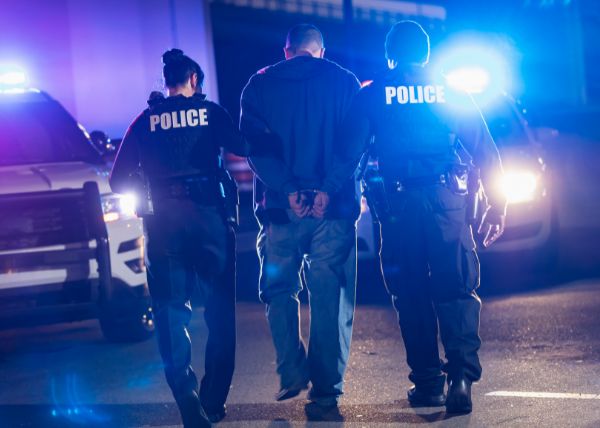
A wrongful arrest lawyer in Los Angeles represents people arrested without probable cause by the LAPD, the Los Angeles County Sheriff's Department, and other agencies. Wrongful arrests come from mistaken identity, false accusations, warrant errors, and retaliation. Federal and California law allow claims against the officers and the agencies that employ them.
Justin Palmer Law Group represents people wrongfully arrested across Los Angeles County and Southern California. Justin A. Palmer and the firm bring civil rights claims against officers, deputies, and the cities and counties responsible for them. This page is part of the firm's California police brutality lawyer practice.
Were you arrested for something you did not do? Contact Justin Palmer Law Group to talk about what happened and which deadlines apply.
Call us 24/7 at (310) 658-8935 to speak with a California police brutality lawyer, or reach out online to start your free case review.
A wrongful arrest lawyer investigates whether officers had probable cause and gathers the reports, video, and records behind the arrest. Claims then go against the officers and agencies responsible. The work includes a government claim within six months and lawsuits in state or federal court. The goal is compensation and a clear record.
A wrongful arrest can cost a job, housing, custody time with children, and a reputation built over years. Even a short stay in jail can be traumatic.
Civil claims are separate from the criminal case. A criminal defense lawyer fights the charges. A civil rights claim seeks compensation for the arrest itself.
The two cases affect each other. Statements, timing, and the way the criminal case ends all shape the civil claim.
A wrongful arrest in California is an arrest made without probable cause or without a valid warrant. Probable cause means facts that would lead a reasonable officer to believe the person committed a crime. An arrest based on a hunch, a bias, or a known false report can violate the Fourth Amendment.
The Fourth Amendment protects people from unreasonable seizures, and an arrest is a seizure. Officers need probable cause at the moment they make the arrest.
Probable cause does not require proof beyond a reasonable doubt. It does require more than suspicion. Officers cannot ignore obvious facts that clear someone.
California law also protects against false arrest. It generally shields officers when the arrest was lawful or they reasonably believed it was. That protection does not cover arrests with no reasonable basis.
A wrongful arrest is sometimes called a false arrest. In California, the two terms usually mean the same thing.
Common causes of wrongful arrests in Los Angeles include mistaken identity, false accusations officers failed to check, warrant errors, and racial profiling. Retaliation for recording or criticizing police, protest arrests, and arrests based on unreliable facial recognition or lineup results also lead to wrongful arrests.
Wrongful arrests usually come from shortcuts or bias, not true mysteries. Frequent causes include:
Retaliatory arrests need special attention. Recording police in public is protected by the First Amendment, and so is criticizing officers. An arrest meant to punish speech can support a First Amendment retaliation claim, even when officers point to a minor offense.
Protest arrests raise similar issues. Officers generally need probable cause for each person arrested, not just a general sense that a crowd was unlawful.
Each of these can support a civil rights claim when officers lacked probable cause. For repeated targeting, see the racial profiling lawyer page.
If you were wrongfully arrested, stay calm, do not resist, and say you want to remain silent and speak with a lawyer. After release, write down everything you remember, save your paperwork, and collect witness names. Then speak with a wrongful arrest attorney before the six-month government claim deadline.
Resisting, even when the arrest is wrong, can lead to added charges and injuries. The place to fight the arrest is in court.
Write down officer names, badge numbers, what they said, and the exact times. Note anyone who saw the arrest.
Keep your booking paperwork, property receipts, bail records, and court notices. Save texts, receipts, or location data that show where you really were.
Ask nearby businesses and neighbors to save camera footage. Read about evidence to save in the first 48 hours.
Avoid posting about the arrest online. Statements on social media can be used in both the criminal and civil cases.
Yes. Dropped or dismissed charges often support a wrongful arrest claim, though they do not prove one on their own. The key question is whether officers had probable cause when they made the arrest. A dismissal can also support a malicious prosecution claim if charges were pushed without probable cause.
Charges get dropped for many reasons. Some reasons point to a bad arrest, like a witness recanting or video clearing the person.
California law treats some arrests without charges as detentions only. People released without charges can request a record showing the arrest was a detention.
A conviction is different. It can block civil claims that would contradict it, unless the conviction is later overturned.
Even if the case is still pending, the government claim deadline keeps running. Many people file the claim on time and pause the lawsuit until the criminal case ends.
No, but they are closely related. Wrongful arrest focuses on the arrest itself. False imprisonment covers being held without legal authority, including detentions and jail stays that run too long. Malicious prosecution covers criminal charges pursued without probable cause and for an improper reason, after the case ends in the person's favor.
Many cases include all three claims. An arrest without probable cause can lead to days in jail and months of prosecution.
Each claim has its own rules and timing. Malicious prosecution usually requires that the criminal case ended without a conviction.
Being held past a release date or kept in jail after charges were dropped can support a false imprisonment claim. See the false imprisonment lawyer page.
Yes. Arrests on warrants can still be wrongful when officers arrest the wrong person or rely on a warrant they know was recalled. The same is true when officers obtained the warrant with false or misleading information. A warrant built on lies or key omissions can violate the Fourth Amendment, even though a judge signed it.
Mistaken identity warrant arrests are common. Two people with the same name or birth date can be confused in databases.
People with common names are at higher risk. Keeping documents that show your date of birth and identifying details can help clear up a mix-up quickly.
Officers must take reasonable steps when someone clearly does not match the warrant. Ignoring obvious differences in age, height, or photo can support a claim.
Warrants also expire or get recalled. Agencies that fail to update their systems can be responsible for arrests based on stale records.
When officers lie or leave out key facts to get a warrant, the judge's signature does not protect them. Those claims require careful review of the warrant application.
A wrongful arrest claim generally requires proof that officers arrested you and lacked probable cause at that moment. Under federal law, you must also show they acted under color of law. Evidence such as video, police reports, dispatch records, and alibi proof helps show what officers knew and when.
Color of law means using power that comes from a government job, such as a badge. The key elements include:
Alibi evidence can be powerful. Phone location data, work records, receipts, and video from where you actually were can show officers had the wrong person.
Body cam footage often shows what officers heard and saw before the arrest. Dispatch records show what information they had. Read more about how federal civil rights claims against police work.
Wrongful arrest claims against a city or county under California law generally require a government claim within six months of the arrest. Federal civil rights lawsuits generally must be filed within two years. For a federal false arrest claim, the clock usually starts at the arrest, not when charges are dropped.
That timing surprises many people. Waiting for the criminal case to end can cost a false arrest claim.
A government claim is a written notice to the public agency describing what happened and the harm caused. Claims against the LAPD go to the City of Los Angeles. Claims against sheriff's deputies go to Los Angeles County.
The agency generally has 45 days to respond. Read more about how the six-month government claim deadline works.
Malicious prosecution claims follow a different clock. They usually start when the criminal case ends in the person's favor.
Yes, in many cases. California lets people petition for a finding of factual innocence, which seals and later destroys the arrest record. People released without charges can get the arrest treated as a detention. Other sealing options exist for arrests that did not lead to a conviction.
A finding of factual innocence means a court found no reasonable cause to believe the person committed the crime. It is a high bar, but it clears the record in a powerful way.
Arrest records can show up in background checks for jobs, housing, and licenses. Clearing them protects future opportunities.
Some employers and landlords see arrest records even when no charges were filed. That is why clearing the record matters, even after the criminal case is over.
Record clearing and a civil claim can happen at the same time. A factual innocence finding can also support the civil case.
A wrongful arrest claim can seek compensation for time in custody, lost wages, bail and defense costs, emotional distress, and harm to reputation. Injuries from the arrest can add medical costs. Punitive damages may be sought against individual officers for reckless or intentional conduct, but not against cities or counties.
The losses from a wrongful arrest add up quickly. They can include:
No one can predict what a case is worth. Factors include the length of custody, video, witnesses, the officer's history, any policy failure, qualified immunity, and venue.
Qualified immunity can apply to federal wrongful arrest claims against individual officers. It is a court-created defense that shields officers from federal damages unless they violated a clearly established right. In arrest cases, courts often ask whether officers had at least arguable probable cause. It does not protect cities or counties.
Arguable probable cause means a reasonable officer could have believed probable cause existed, even if it did not. That standard gives officers room for honest mistakes.
It does not protect officers who ignored obvious facts, relied on false reports they knew were unreliable, or arrested someone in retaliation.
California state-law claims, like false imprisonment and Bane Act claims, follow different rules. Learn more in what qualified immunity means.
Our Los Angeles wrongful arrest attorneys start by protecting the six-month government claim deadline and preserving body cam footage, dispatch records, and alibi evidence. The work then moves through records requests and investigation of what officers knew. Claims are filed in state or federal court and pursued through discovery toward settlement or trial.
The first conversation focuses on the arrest, the charges, and where the criminal case stands. Those answers shape the timing of every claim.
Preservation letters go out early for body cam footage, dispatch audio, booking records, and warrant records.
Investigation may involve retained professionals such as police practices consultants, investigators, and video analysts. Their work helps show what a reasonable officer would have known.
For related claims, see the wrongful conviction lawyer and Los Angeles civil rights lawyer pages.
Were you arrested without probable cause in Los Angeles County? Justin Palmer Law Group can review what happened and explain the deadlines that apply. Contact Justin Palmer Law Group for a confidential case review.
Call us 24/7 at (310) 658-8935 to speak with a California police brutality lawyer, or reach out online to start your free case review.
Attorney Advertising | Prior results do not guarantee a similar outcome. The information on this website is for general information purposes only. Nothing on this site should be taken as legal advice for any individual case or situation. This information is not intended to create, and receipt or viewing does not constitute, an attorney-client relationship. This site is protected by reCAPTCHA and the Google Privacy Policy and Terms of Service apply.