
Call Now For A Free Consultation:
Call Now For A Free Consultation:
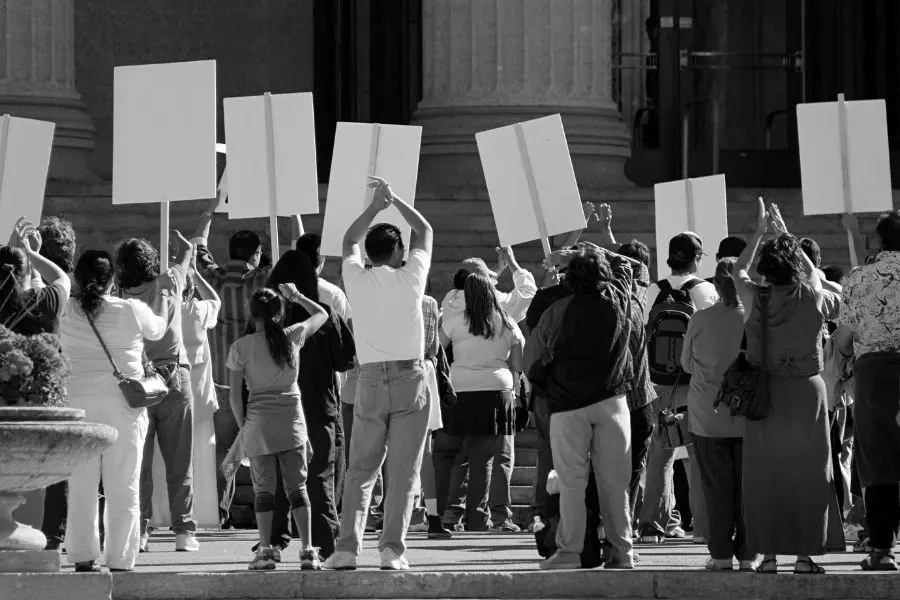
Yes. You can sue a city if police injured you at a protest. Whether you win depends on how the force was used, whether your rights were violated, and how quickly you act.
Most people don't know that. They assume the police are untouchable. Or that because a protest turned chaotic, any injuries that happened are just something they have to live with. Neither of those things is true.
This post covers what it actually takes to sue a city for police injuries at a protest, what laws protect you, and why the window to act is shorter than you think.
Call us 24/7 at (310) 658-8935 to speak with a California police brutality lawyer, or reach out online to start your free case review.
Legally? Sometimes. But the line is thin, and law enforcement crosses it more than most people realize.
Police can use force to disperse a crowd that has been declared unlawful. They cannot use force against people who are peacefully assembled. The First Amendment protects your right to protest. The Fourth Amendment protects you from unreasonable force even when you're being arrested.
Here's the part most people get wrong: a police order to disperse does not give officers a blank check to injure everyone in the area. If officers fired rubber bullets into a crowd, deployed pepper spray without warning, or beat someone who was not resisting, those actions may cross into unlawful force regardless of what the crowd around that person was doing.
California law and federal law both speak to this. And in Inglewood and across Los Angeles County, protest-related civil rights claims have survived court scrutiny when the force used was excessive, indiscriminate, or retaliatory.
Two legal frameworks matter most here.
The first is 42 U.S.C. Section 1983. This federal law allows people to sue government officials, including police officers, for violating their constitutional rights. If an officer used excessive force against you at a protest, Section 1983 is likely the foundation of your claim.
The second is the Bane Act. This is a California state law that goes further than federal law in some ways. It protects people from threats or violence intended to interfere with their civil rights. If police injured you to stop you from protesting, the Bane Act may apply directly.
Both paths can lead to money damages, attorney's fees, and sometimes injunctive relief, meaning a court order requiring the agency to change how it operates.
The city itself can be named as a defendant when the misconduct reflects a policy, a pattern, or a failure to train officers properly. That legal concept comes from a U.S. Supreme Court case called Monell v. Department of Social Services. Under Monell, you're not just suing the officer who hurt you. You're arguing the city created the conditions that made that injury possible.
Courts look at whether the force was reasonable given the circumstances. That sounds vague, but in practice there are specific factors.
You don't have to have been arrested. You don't have to have done anything wrong. If you were at a protest and police injured you, the question is whether what they did was constitutional. That's it.
It matters, but not in the way most people think.
An unlawful assembly declaration doesn't strip you of your rights. It means police have the authority to order dispersal. It does not mean they can injure people at will or punish those who are trying to leave.
People who were actively trying to comply with dispersal orders and still got hurt have viable claims. People who never heard the order because they were far from where it was announced have viable claims. People who were press, legal observers, or medics and were targeted anyway have viable claims.
The city will likely argue the protest was chaotic, that officers had to make split-second decisions, and that injuries were unavoidable. That argument has limits. Our civil rights lawyers at Justin Palmer Law Group know where those limits are.
Broken bones from rubber bullets. Eye injuries, including permanent vision loss. Head trauma from baton strikes. Chemical burns from pepper spray or tear gas. Soft tissue damage from crowd control projectiles. Psychological harm from being targeted or attacked.
Physical injury doesn't have to be permanent to matter. What matters is that force was used against you without legal justification. The severity of your injuries affects the value of a potential claim, but it doesn't determine whether a claim exists.
This is where a lot of people lose their cases before they even start.
To sue a city or a government agency in California, you must first file a government tort claim. That deadline is six months from the date of the incident. Six months. Not a year. Not two years. Six months.
If you miss that deadline, you will almost certainly lose your right to sue. Courts rarely grant exceptions. This is not a procedural technicality. It is a hard stop.
After the city responds to your tort claim, or after 45 days pass with no response, you then have six months to file your actual lawsuit.
Federal civil rights claims under Section 1983 operate on a different timeline. But even if you're pursuing a federal claim, talk to our civil rights attorneys in Inglewood immediately. Waiting to see how things develop is the fastest way to run out of options.
Can I sue the city if I was not arrested but police still injured me at a protest in California?
Yes. Arrest is not a requirement. If officers used force against you without legal justification, you may have a civil rights claim whether or not you were detained or charged with anything.
Can I sue both the officer and the city for excessive force at a protest?
Yes. Section 1983 allows claims against individual officers. Claims against the city itself require showing the injury resulted from a policy, custom, or failure to train. Our civil rights lawyers evaluate both angles in every case.
What if I don't have video evidence of the police injuring me at the protest?
Video helps, but it's not required. Witness accounts, medical records, official incident reports, and pattern evidence from other injuries at the same event can all support a claim. Investigations often uncover evidence the city would rather not share.
Does it matter what city or agency the officers worked for?
It matters for who you name as a defendant and where you file. The Inglewood Police Department, the Los Angeles County Sheriff's Department, and the LAPD are separate agencies with separate claim procedures. Getting the right defendant named correctly is critical.
Can I still file a claim if I signed a citation or was released without charges?
Yes. What happened to you after the injury does not determine whether the force used against you was lawful. A citation or a release doesn't close a civil rights claim.
What if police claim I was acting aggressively?
The city will make that argument. Our civil rights attorneys in Inglewood build cases with evidence, not competing narratives. Witness testimony, video footage, medical records, and expert analysis all speak louder than an officer's after-the-fact account.
If police injured you at a protest, you have real legal options. Call Justin Palmer Law Group today. Our civil rights lawyers in Inglewood represent people whose rights were violated by law enforcement, and we know how to build these cases. Don't wait.
Call us 24/7 at (310) 658-8935 to speak with a California police brutality lawyer, or reach out online to start your free case review.
Attorney Advertising | Prior results do not guarantee a similar outcome. The information on this website is for general information purposes only. Nothing on this site should be taken as legal advice for any individual case or situation. This information is not intended to create, and receipt or viewing does not constitute, an attorney-client relationship. This site is protected by reCAPTCHA and the Google Privacy Policy and Terms of Service apply.