
Call Now For A Free Consultation:
Call Now For A Free Consultation:
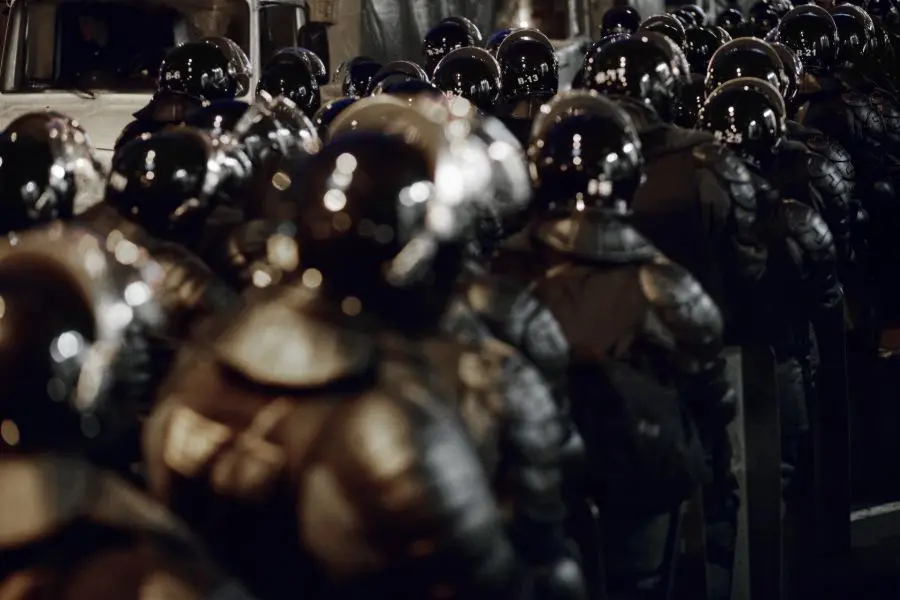
Yes. Being shot with a rubber bullet by police can be the basis of a civil rights lawsuit, even though these projectiles are classified as "less lethal." Whether you have a strong case depends on whether the force was justified under the circumstances.
That phrase "less lethal" has done a lot of work to minimize what rubber bullets actually are. They're not harmless. They've broken bones, destroyed eyes, and killed people. Medical research has documented significant rates of serious injury and death among people struck by rubber and plastic bullets. And yet law enforcement agencies keep deploying them at protests, during arrests, and in crowd situations where the people being shot weren't doing anything to warrant it.
This post covers when a rubber bullet shooting crosses the legal line into excessive force, what claims you can bring in California, what police will argue to justify what happened, and what you need to do fast to protect your rights.
Call us 24/7 at (310) 658-8935 to speak with a California police brutality lawyer, or reach out online to start your free case review.
Not every rubber bullet injury becomes a lawsuit. The legal question is whether the force was objectively reasonable given what was actually happening at the moment the trigger was pulled.
Courts look at this from the perspective of a reasonable officer on the scene, not with the benefit of hindsight. Several factors go into that analysis:
Under the Fourth Amendment, a police shooting is treated as a government seizure. If the force wasn't proportionate to any real threat, it violates the Constitution.
California also passed Assembly Bill 48 in 2021, which specifically limits when police can use rubber bullets at protests. The law requires an objective, articulable threat of violence before deployment. It also prohibits aiming at the head, neck, or vital organs and bans firing blindly into a crowd.
That law has been violated repeatedly. Lawsuits followed rubber bullet incidents at UCLA's campus in Westwood and at demonstrations against ICE raids along downtown Los Angeles corridors including San Pedro Street. Plaintiffs in multiple cases alleged officers fired on people who posed no threat at all.
Both, often. This distinction matters more than most people realize when they're first trying to figure out what happened to them.
Under 42 U.S.C. Section 1983, the federal civil rights statute, you can sue the individual officer who shot you. You can also sue the city or county. Holding a city accountable requires showing that a policy, practice, or entrenched pattern within the department was what drove the violation. That's harder than suing an individual officer. But when agencies deploy rubber bullets at scale against crowds with no individualized threat assessment, that can reflect a department-level decision rather than one officer's judgment call in the moment.
California's Tom Bane Civil Rights Act gives you a separate state law path. It applies when government employees interfere with your constitutional rights through threat, intimidation, or coercion. One major advantage here: Senate Bill 2, passed in 2021, bars officers from raising a qualified immunity defense in Bane Act lawsuits.
Qualified immunity has let officers escape accountability for decades. The argument is simple — if the right they violated wasn't "clearly established" at the time, they pay nothing. Removing that defense in Bane Act cases changes the math significantly for injured plaintiffs in California.
Most people who were hurt at a protest or during a police encounter don't know this rule exists. Then they find out about it too late.
Before you can sue a California government agency on state law claims, you have to file a formal notice with that agency first. It's called a government tort claim. The deadline is six months from the date of injury. Miss it and your state claims are almost certainly gone, no matter how solid the case would have been.
Federal Section 1983 claims work differently. No pre-suit notice required. The deadline to file a Section 1983 lawsuit in California is two years from the incident date.
But most rubber bullet cases involve both federal and state claims. You want both. They create different pressure on the defendant, cover different categories of harm, and give a jury more to work with. That means the six-month government claims deadline is what actually controls your timeline from day one.
Six months sounds manageable. It goes fast.
Expect the department to defend aggressively. These are the arguments that come up most often in Southern California excessive force cases:
Video has repeatedly contradicted official department narratives in exactly these situations. Body camera footage, bystander recordings, and news footage from protests along routes like Harbor Freeway on-ramps and outside the downtown LAPD headquarters have shown officers firing on people who were peaceful, credentialed press, or simply nearby.
A successful Section 1983 claim can include compensation for medical bills, lost income, pain and suffering, and emotional distress. Juries can also award punitive damages when an officer's conduct was found to be especially reckless or malicious. Attorney fees can be recovered from the losing party under federal civil rights law.
Real verdicts from Southern California show the range. A federal jury awarded $375,000 to a man shot in the face by an LAPD officer with a rubber bullet at a 2020 protest. A second plaintiff recovered $1.5 million after a foam projectile caused injuries requiring surgery. The City of Los Angeles later settled a broader civil rights case from that same protest period for $860,000.
For injuries during the 2025 anti-ICE demonstrations in Los Angeles, attorneys filed claims seeking at least $5 million per client.
Permanent injuries change the numbers. Vision loss, hearing damage, lasting physical disability — these expand the categories of recoverable damages to include future treatment costs, reduced earning capacity over time, and long-term pain and suffering.
Don't wait to figure this out.
Can I sue if I was shot with a rubber bullet at a protest in Los Angeles or Southern California?
Yes, if the force wasn't justified by your conduct or any actual threat you posed. A rubber bullet shooting at a protest can support both a federal Section 1983 claim and a California Bane Act claim.
Do I have to have been arrested for the shooting to be unlawful?
No. The Fourth Amendment protects people from unreasonable force regardless of whether they were detained or arrested. Being shot while standing on a public street is legally treated as a seizure.
What if I don't know which officer fired the shot that hit me?
That's common in crowd situations, and it doesn't end the case. Discovery in civil litigation — body camera requests, deployment logs, officer testimony — can identify who fired. Our civil rights attorneys work through that process as part of building the case.
Can journalists or bystanders sue if they were hit?
Yes. Federal civil rights claims and state tort claims cover any person within the jurisdiction. Being a member of the press, an observer, or a non-citizen doesn't disqualify you from filing.
What is the deadline to file a rubber bullet lawsuit against police in California?
For a federal Section 1983 claim, two years from the date of the incident. For state law claims, you must file a government tort claim within six months of the injury. Miss that window and your state claims are typically gone.
What if the rubber bullet caused a permanent injury like vision loss?
Permanent injuries strengthen the case and expand what's recoverable, including future medical costs, reduced earning capacity, and long-term pain and suffering damages.
If police shot you with a rubber bullet in Southern California, our civil rights attorneys at Justin Palmer Law want to hear what happened. Our police brutality lawyers handle excessive force and police brutality claims under Section 1983 and the California Bane Act. Contact us today.
Call us 24/7 at (310) 658-8935 to speak with a California police brutality lawyer, or reach out online to start your free case review.
Attorney Advertising | Prior results do not guarantee a similar outcome. The information on this website is for general information purposes only. Nothing on this site should be taken as legal advice for any individual case or situation. This information is not intended to create, and receipt or viewing does not constitute, an attorney-client relationship. This site is protected by reCAPTCHA and the Google Privacy Policy and Terms of Service apply.